Place guide
Baptists in Western Colorado: A Record
How Baptist churches reached western Colorado after the gold rush, what a Baptist service contains, and why immersion baptism is practised as it is.
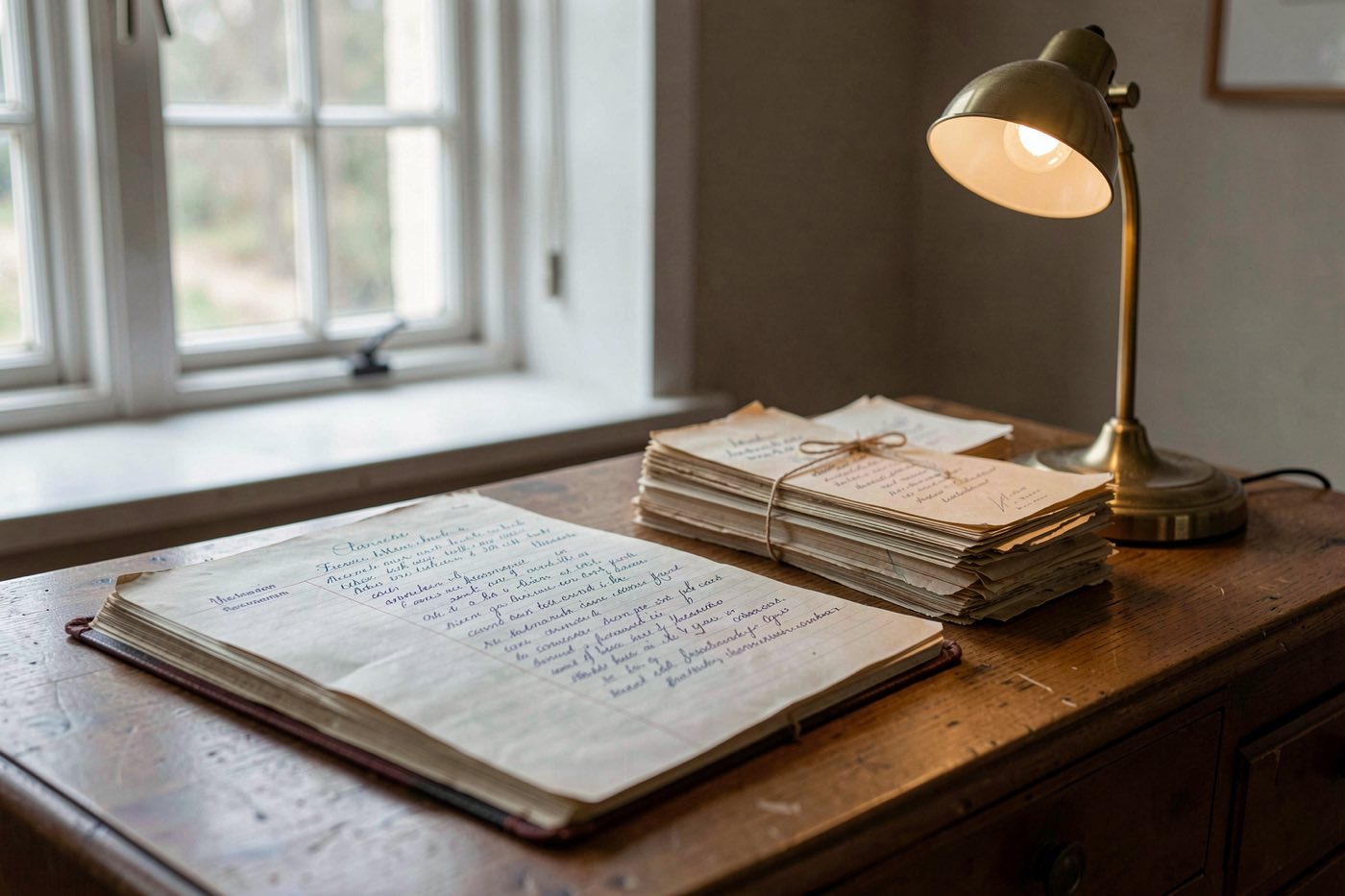
Baptists reached western Colorado in the decades after the gold rush, not in a single wave but congregation by congregation, as miners' camps became towns and towns became county seats. The First Baptist Church of Grand Junction was founded in 1883, the same year the town itself was organised, and it remains active today. Baptist practice rests on two points that outsiders most often ask about: immersion as the mode of baptism, and a service ordered around preaching, hymnody and the ordinances rather than a fixed liturgy.
What do Baptists believe about baptism and why do they immerse?
Baptists hold that baptism is for believers, not infants, and that it is administered by immersion, meaning the whole body is placed under water. The reasoning is textual and historical. The Greek word behind the English "baptise" carries the sense of dipping or plunging, and the New Testament accounts describe people going down into water and coming up out of it. Because Baptists read baptism as a public declaration of a faith already professed, they tie it to a personal confession rather than to birth or family standing.
This is why Baptist congregations do not practise infant baptism. A parent may present a child for dedication, a service of blessing and commitment, but baptism itself waits until the person can answer for themselves. The ordinance is normally performed in a baptistry set into the wall behind the pulpit, or in a river or lake where a congregation has no tank. The candidate is usually asked a short set of questions, the congregation is asked to affirm its support, and the pastor lowers the person backward into the water once, in the name of the Father, the Son and the Holy Spirit.
For readers who want the practice set out at length, a baptist baptism by immersion explained treatment walks through the scriptural passages, the meaning of the ordinance as symbol rather than sacrament, and the way Baptist congregations describe what is happening and what is not. The short version: the water does not save anyone in Baptist teaching. It marks a profession already made.
How is a Baptist worship service structured from opening hymn to benediction?
There is no single Baptist order of service, and that is itself a Baptist feature. Congregations govern themselves, so a service in one town may differ in detail from a service forty miles away. What recurs across most American Baptist congregations is a shape rather than a script.
A typical Sunday morning runs roughly an hour. It opens with a call to worship, often a responsive reading drawn from the Psalms, followed by a hymn. Announcements come early, then a period of congregational prayer, sometimes with spoken concerns from the floor. A second hymn or a choir anthem follows. The sermon sits at the centre and usually runs twenty to thirty minutes, expository in style, working through a passage rather than a theme. An offering is received, often before the sermon rather than after. The service closes with a hymn and a benediction, a short blessing spoken over the congregation.
The two ordinances, baptism and the Lord's Supper, are observed within this frame. The Supper is typically celebrated monthly, sometimes quarterly, and is open in most American Baptist congregations to any baptised Christian rather than restricted to members. Communion is usually served by passing trays of bread and small cups through the pews, though some congregations gather at a common table.
What is absent is equally telling. There is no fixed lectionary that all Baptist churches follow, no required vestment, no altar in the sacrificial sense. The pulpit, not the altar, is the architectural centre of a Baptist sanctuary, and the baptistry is usually placed directly behind it so that the two visible signs of Baptist identity sit in the same line of sight.
What is the difference between American Baptist Churches USA and Southern Baptists?
Both bodies descend from the same broad Baptist stream, and both hold to believer's baptism by immersion. They diverged over governance, region and, in the twentieth century, theology and politics.
American Baptist Churches USA, often shortened to ABCUSA, is the older of the two national bodies in its present form, with roots in northern congregations and in mission societies founded in the early nineteenth century. It organises regionally, and Colorado falls under the American Baptist Churches of the Rocky Mountains. ABCUSA congregations tend to stress local church autonomy, a range of theological positions within the same fellowship, and historic involvement in mission and social ministry.
The Southern Baptist Convention formed in 1845 and grew into the larger of the two bodies nationally, with a strong presence across the South and, later, nationwide. It operates through a more centralised convention structure, with agencies for missions, seminaries and publishing, and it has taken defined positions on doctrinal and social questions that member churches are expected to reflect.
For a visitor, the practical differences show up in congregational life. An ABCUSA church is more likely to ordain women, to describe itself as moderate or progressive on some questions, and to belong to a regional association with a light central hand. A Southern Baptist church is more likely to use the convention's literature, to support its mission boards directly, and to hold to a statement of faith with narrower boundaries. Neither description fits every congregation. Local churches in both bodies vary widely, which is why the association a church belongs to is a better guide than the label on the sign.
How did Baptist churches spread across Colorado after the gold rush?
Baptist work in Colorado began with the 1859 gold rush and followed the mining frontier west. The First Baptist Church of Denver was organised in 1864, making it one of the earliest Baptist congregations in the territory. From Denver and the Front Range, churches were planted along the routes that carried prospectors and merchants into the mountains and, later, onto the Western Slope.
Grand Junction was founded in 1881 at the confluence of the Gunnison and Colorado rivers, and it grew quickly as a rail and agricultural centre for the Grand Valley. The First Baptist Church of Grand Junction was established in 1883, two years after the town, and its early record is documented in the Grand Junction News and in Mesa County records. Congregations in Palisade, Fruita, Delta, Montrose and Glenwood Springs followed in the same period, usually organised by circuit-riding missionaries or by settlers who had been Baptists elsewhere and wanted a church of their own.
The pattern was consistent. A handful of families would meet in a home or a schoolhouse. A missionary supported by a national home mission society would visit, preach, and help constitute a church. Once the congregation had enough members and money, it would call a pastor, build, and join a regional association. Associations in turn sent messengers to the national convention, which is how a small congregation in a Colorado valley stayed connected to a wider body.
Why the record matters
Baptist history in western Colorado is not a story of one institution but of many small ones, each with its own minute book, its own building dates, and its own list of pastors. County records, local newspapers and association annuals are the places where that history survives, and they are open to anyone willing to read them. The questions readers ask most often, about immersion, about the shape of a Sunday service, about which convention a church belongs to, all have documentary answers. The answers are local, dated, and checkable.
What to look for in a local church record
A congregation's history can usually be reconstructed from four kinds of document. County deed records show when land was bought and a building erected. Local newspapers, particularly the weekly society columns, record revivals, pastor installations and anniversaries. Association annuals list member churches, reported baptisms and contributions year by year. And the church's own minute book, where it survives, gives the sequence of decisions in the congregation's own words.
For anyone tracing a family or a town, the association annual is often the most efficient starting point, because it places a single church inside a network of others and dates its entry into that network. From there, the county records and the newspaper file fill in the rest.
How to use this entry
Start with the source ledger, then follow the record links for the most precise available description. The Atlas adds context and connections, but it does not replace the record holder.